9:00am-10:45am – Economic and Social Rights: Grappling with Inequality
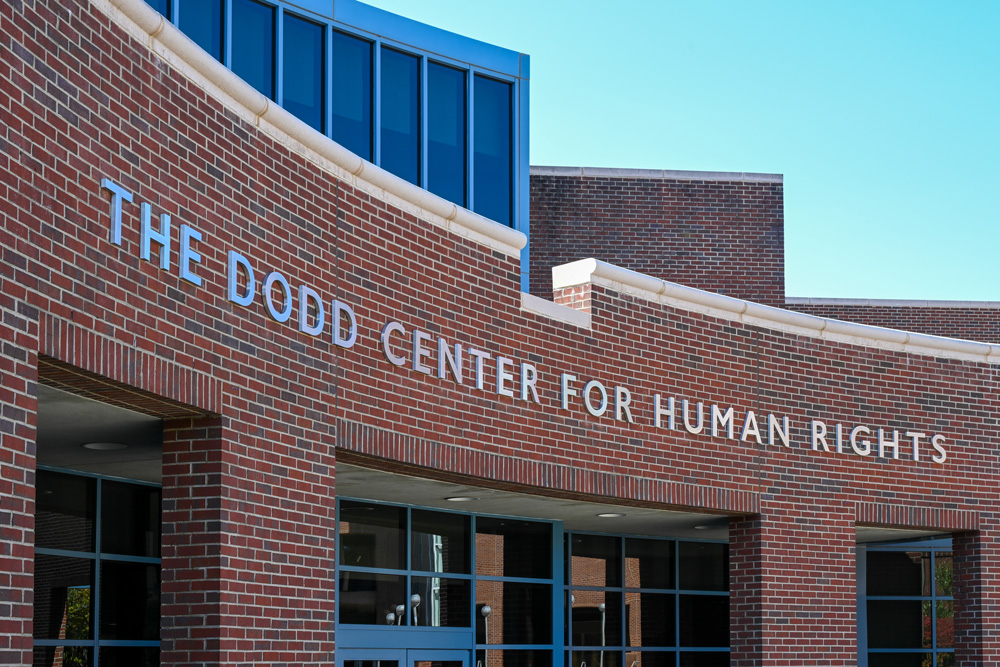
Location: Konover Auditorium, Thomas J. Dodd Research Center
Inequality has emerged as a flashpoint in debates on the relevance of human rights in a context of heightened populism, nativism, and authoritarianism in the 21st Century. Philip Alston recently called for the human rights community to address “the extent to which extreme inequality undermines human rights.” This panel will explore the relationship between rising levels of inequality and anti-globalization currents, and, by extension nativist backlash. How do human rights methods and tools address increased levels of inequality a national and global levels? What are human rights approaches to government spending and taxation? Is it possible to revitalize movements to advance economic and social rights in the face of austerity? How should human rights grapple with economic crises?
Panelists
- Varun Gauri, World Bank
- Tara Melish, State University of New York, Buffalo
- Istvan Rev, Central European University
- Ignacio Saiz, Center for Economic and Social Rights
- Katherine Young, Boston College
Moderator: Shareen Hertel, University of Connecticut Moderator:
11:00am-12:30pm – New Modes of Mobilization for Human Rights
Location: Konover Auditorium, Thomas J. Dodd Research Center
The traditional means and methods of human rights—mobilizing shame, finding facts, seeking prosecution—appear increasingly ineffectual in responding to modern human rights problems. Governments are shameless and “truth” seems irrelevant or non-existent. How is human rights advocacy evolving, and responding to new challenges? Should human rights change its tactics? Are those mobilizing for human rights at national and transnational levels equipped to meet challenges? This panel will explore examples of human rights advocacy and research that are uniquely well placed to meet current challenges.
Panelists
- Gerardo Reyes Chávez, Coalition of Immokalee Workers
- Kasia Malinowska, Open Society Foundations
- Rashida Manjoo, University of Cape Town
- Margaret Satterthwaite, New York University
- Jessica Wyndham, American Association for the Advancement of Sciences
Moderator: Glenn Mitoma, University of Connecticut
1:00pm-3:00pm: Lunchtime Breakout Sessions – Methodological Innovations on Human Rights
Location: Rome Commons Ballroom
This is an interactive session allowing conference participants to choose a breakout session on methodological innovations in human rights mobilization. Human rights practitioners will give brief presentations, followed by a guided discussion with attendees.
Session Topics/Presenters
Mobilizing the World to End Violence Against Women: The Campaign for an International Treaty
This session offers a window into the growing movement for a stand-alone, legally-binding international treaty addressing violence against women and girls. Presenters from the global NGO “Everywoman Treaty” will discuss the movement’s origins, their group’s strategy and tactics, and the political and mobilization-related challenges ahead.
- Charlie Clements, Everywoman Treaty
- Lola Ibrahim, Everywoman Treaty
- Moderator: David Richards, University of Connecticut
The Human Rights Measurement Initiative
This session introduces the Human Rights Measurement Initiative (HRMI), a global collaborative project that is focused on providing human rights data useful to practitioners, researchers, journalists, and everyday people worldwide. HRMI uses a co-design process tapping the insights and needs of human rights advocates, practitioners, and researchers across disciplines and professions to produce human rights data rigorously grounded in international law and present it in a way that is readily usable and understandable for academics, policy makers, journalists, advocates on the front line and ordinary people alike.
- Susan Randolph, University of Connecticut
Enhancing Human Rights Through Mediation and Peaceful Dispute Resolution
This session will address the interrelationship of human rights, rule of law and peaceful dispute resolution. The presenter, founder of an NGO dedicated to promoting mediation and ADR worldwide, will discuss the strategies (and some of his “eye opening”experiences) to provide access by underserved populations to timely, fair and effective justice in heavily backlogged court systems.
- Vic Schachter, Foundation for Sustainable Rule of Law Initiatives
Protecting Scholars at Risk and Academic Freedom
This session introduces the protection work of Scholars at Risk (SAR), which is an independent not-for-profit hosted at New York University and global network of universities supporting scholars targeted for their work. A total of 294 attacks on higher education communities in 47 countries were reported by SAR from September 1, 2017, to August 31, 2018. As attacks on the higher education community, scholars, and academic freedom grow in number, we will discuss ways in which universities and individuals can mobilize and get involved with SAR’s work to promote academic freedom and protect scholars facing risk.
- Shreya Balhara, Scholars at Risk
Genocide Prevention in the 21st Century
Twenty-five years after the Rwandan genocide mass atrocities continue to occur around the world. Can we ever successfully prevent atrocities? In this breakout, we will discuss contemporary efforts aimed at making atrocities prevention a reality as well as how you can get involved in advocating for legislation that would improve the US government’s ability to prevent atrocities.
- Mike Brand, Human rights/atrocities prevention advocate
4:00pm – Performance and Closing Address
Location: Thomas J. Dodd Research Center
Musical performance and closing keynote talk by Mai Khoi.
Reception