By Rojda Idil Arslan
I am a student of stories. My doctoral research concerns refusal in Kurdish human rights novels — more precisely, the ways that literatures of refugees, genocide, and captivity resist being defined, categorized, or consumed, and push back against easy interpretation. That resistance is, in many respects, the theoretical center of what I study. But lately, my engagement with human rights has not taken place in a library or a classroom. It has taken place in a spreadsheet.
This is not what I had anticipated, but it has proven worth thinking through carefully.
I read recently Michael Ondaatje's Anil's Ghost. In it, Anil, a forensic anthropologist, works to identify a skeleton — to name it, to restore it to a history. The novel is, among other things, about how fragments get read and misread, and about how the desire for resolution can shape what the evidence is permitted to say. I found myself returning to it while working on the ICTY Digital Archives, not because the comparison is exact, but because the practical difficulty is similar. You are handling partial records, and you are trying to make them legible to someone who was not present, and who may arrive without context.
My work in the archives included file naming, metadata entry, spreadsheet ingests, and re-publishing records on the Connecticut Digital Archive (CTDA) website. For example, for the Bill Tomljanovich Collection, I worked through parts of the Republic of Croatia Presidential Transcripts from 1992 to 1995, checked dates, exhibit numbers, page orders, title consistency, and so on. For the Kunarac et al. (Foča Case), part of the ICTY Sexual Violence Legacy Archives Collection, my work required reading of trial documents, including transcripts and exhibits related to charges of rape and sexual enslavement. The Kunarac case, together with Čelebići and Furundžija, marks a significant moment in the development of international criminal law. It was the first time an international tribunal handed down convictions based solely on crimes of sexual violence, and it extended the legal definition of enslavement to encompass sexual enslavement as a crime against humanity.
Describing these records presents a methodological problem I had not fully anticipated. How do we produce accurate, usable metadata without sanitizing content that ought not to be sanitized? What happens when the demand for neutral, professional description flattens the character of what a document actually contains? And how do we avoid the opposite failure, that is, description that foregrounds detail in ways that may sensationalize rather than document? This is, of course, not a problem unique to archival work. It runs through human rights documentation more broadly.
Sexual violence in conflict, and particularly sexual violence as a systematic instrument of genocide, has a complicated relationship with public representation. On one hand, visibility has carried real legal and political weight. The documentation of systematic rape in Bosnia, or more recently the sexual enslavement of Yazidi women by ISIS (see, for example, this article on how media sensationalizes sexual violence), brought these issues onto international legal and policy agendas in ways that produced concrete consequences.
On the other hand, that same visibility has frequently tipped into sensationalization. Coverage that centers the details of violence over the structural conditions that make it possible, that positions survivors primarily as victims for external audiences, and that can, paradoxically, reproduce the very dehumanization it claims to oppose. The archive, if it is not carefully managed, risks participating in the same dynamic.
Saidiya Hartman, writing in a different context, describes colonial archives that hold almost nothing about the subjectivity and personhood of the enslaved, where the people they concern appear only as property. The Foča materials pose a problem that is at once similar and different. There is no shortage of records about the people concerned. The ICTY documentation is extensive. But abundance does not mean that the people appearing in these records are fully present within them. What survives is a legal record, shaped by the requirements of evidence, and that language carries distortions of its own.
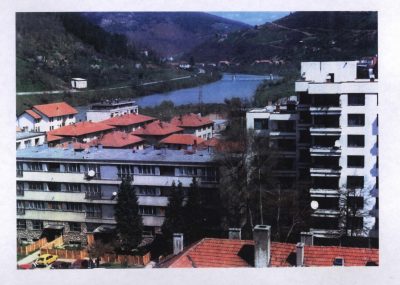
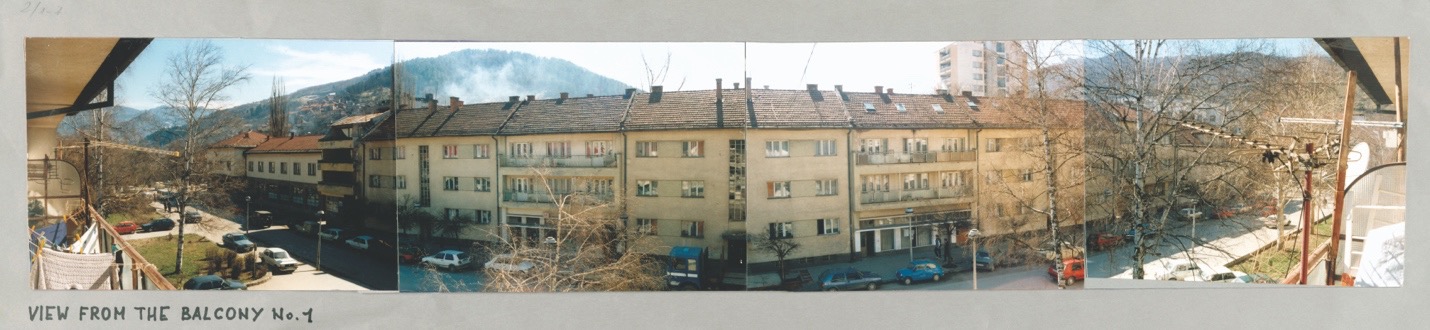
In my opinion, the visual exhibits cut through that linguistic abstraction in an unexpected way. Most of them are maps, photographs of buildings, aerial views, geography, infrastructure, the physical coordinates of what occurred. And there is something strange about encountering a photograph of a building when you know, from the surrounding documents, what took place inside it. The image does not show the violence. It only confirms that the place is real, that it exists, that this happened somewhere specific. That is its own kind of weight, and it settles differently than text.
In the end, whether the archival materials are visual, textual, or multimedia, my experience with the ICTY Sexual Violence Legacy Archives Collection taught me that justice, history, and the archive are not finished things. Rather, they are ongoing processes that require careful manual work, ethical responsibility, and collaboration at the same time.
About The Author

Rojda Idil Arslan
Rojda is a PhD student in Comparative Literary and Cultural Studies, also pursuing a graduate certificate in Human Rights. Her research focuses on Kurdish novels and the emergence of alternative perspectives on human rights in those works. She is particularly interested in how literary works function as sites of resistance and refusal, as well as how they work to renew and redefine existing definitions of rights and justice. In her curatorial work with the ICTY Digital Archives, Rojda supports the collective effort to ensure complex legal and historical records remain both accessible and permanent. This work involves applying her background in human rights to help preserve at-risk histories at the intersection of narrative and justice.