About Wiktor
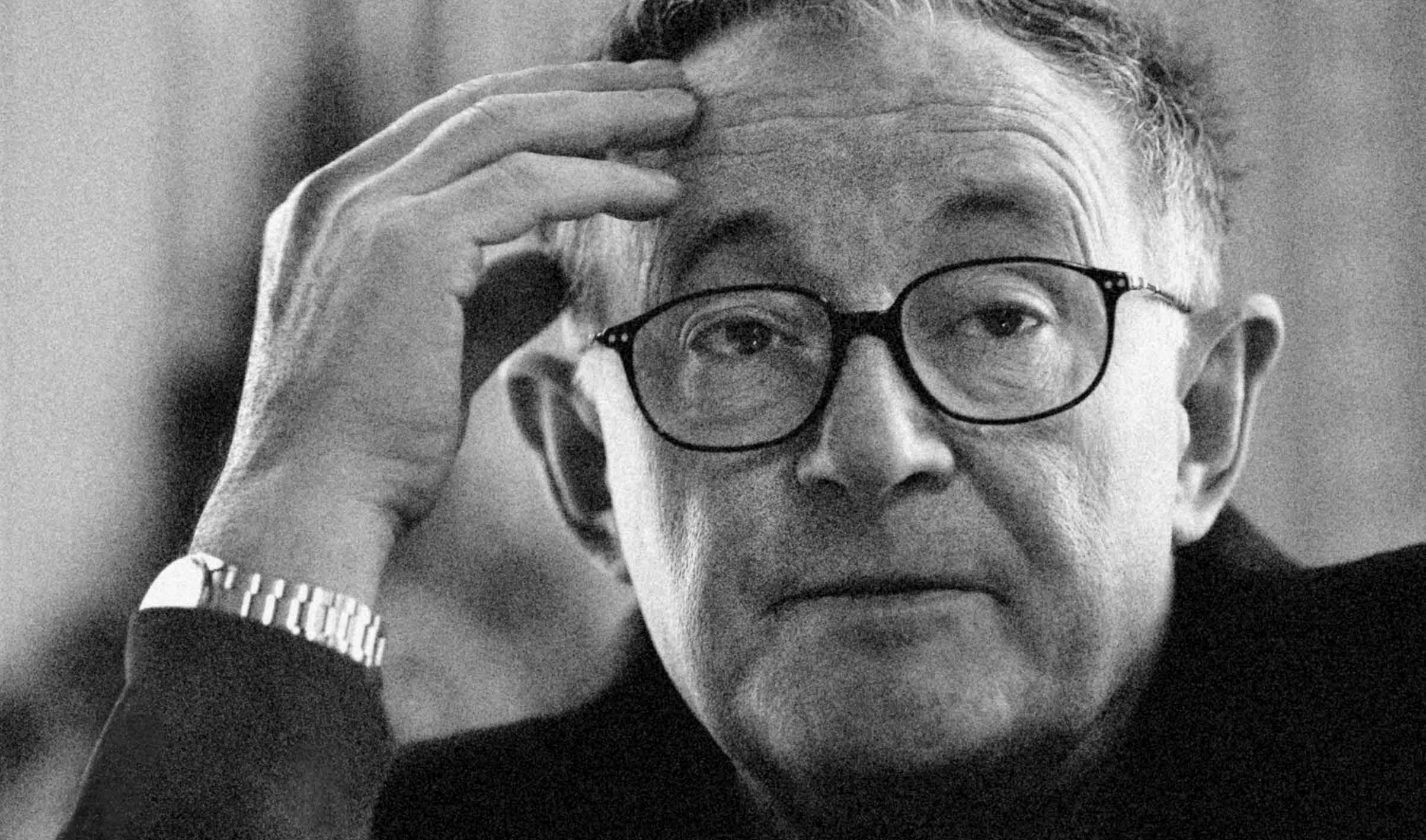
Wiktor Osiatyński (1945-2017) was an internationally recognized lawyer, professor, and human rights advocate. He earned a degree in law from Warsaw University and a doctoral degree in sociology from the Polish Academy of Sciences. Born in Białystok, Poland, Osiatyński spent his boyhood in Warsaw, where in the 1950s dissidents were jailed for “the slightest — or purported — unwillingness to cooperate with the oppressive postwar system.” He recalls, “Most unbearable for intellectuals was the lack of freedom of speech. The state’s monopoly over the media, along with the strictest kind of censorship, made it difficult for ordinary citizens to learn the truth, both about ‘the rest of the world’ and about Poland’s own history.”1 Osiatyński’s participation in the demonstrations of March 1968 marked an early point in his activism and interest in human rights, which grew in the wake of the 1975 Helsinki Agreement and the 1976 UN human rights covenants.
With the rise of the Solidarity Movement, human rights became an important part of dissident platforms in Eastern Europe. Osiatyński was engaged both as an activist and as a theoretician in this movement. In the preface to Human Rights and Their Limits, he writes, “I was interested primarily in defining the social and political conditions in which the idea of rights and freedoms could flourish. In 1989, as communism in Poland disintegrated, these ideas became practical.”2 Osiatyński advised on several constitutional committees and co-authored the draft of Poland’s Bill of Rights that President Lech Wałęsa presented to the Polish Parliament. He also wrote a number of provisions that became part of Poland’s new Constitution (1997).
In the second half of his life, Osiatyński split his time between a more activist life in Poland and a more scholarly one in the United States. In Warsaw, he founded the Commission of Education on Alcoholism and Drug Addiction at the Stefan Batory Foundation, which he chaired between 1988 and 1995. He worked closely with his wife, Ewa Woydyłło-Osiatyńska, renowned author, activist, and creator of innovative programs to address alcoholism and substance use in Poland and other East European countries. For three decades, he dedicated significant time to consulting, advocacy, and building awareness of the need for such programs globally. Between 1991 and 1997, Osiatyński co-directed the Center for the Study of Constitutionalism in Eastern Europe at the University of Chicago Law School, and in 1995 he was appointed professor in the Department of Legal Studies at the Central European University in Budapest. He was a long-standing board member of Open Society Foundations (OSF), the OSF Global Board, and the Open Society Justice Initiative.
Osiatyński authored more than 20 books in his lifetime, on subjects ranging from constitutionalism and comparative history of social and political thought to addiction, sports, and society. In Human Rights and Their Limits, Osiatyński outlined a key theme that he would revisit in later years, closing the book with a letter to students underscoring that rights and freedoms must be regarded as “the floor upon which you can act, but from which you may also need to spring up – towards a spirituality of your choice, values you cherish, and commitments to others.”3
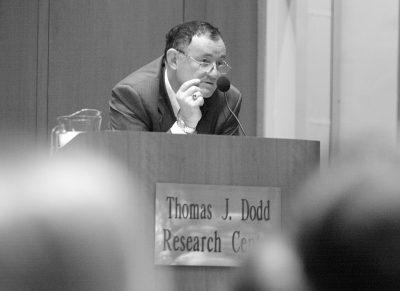
In the late 1990s, Osiatyński formed close relationships with colleagues at the University of Connecticut, where he played a pivotal role in fostering the development of human rights programs and the founding of the Human Rights Institute (HRI). In October 2000, Osiatyński delivered the first lecture as the Marsha Lilien Gladstein Visiting Professor of Human Rights at the University of Connecticut. On that day, he highlighted themes relevant nearly twenty years later, including the importance of developing programs “that not only talk about human rights in history, sociology, and political science, but really work on attitudes and how we [relate] to each other.”4 He returned annually to lecture and co-teach courses with UConn faculty, and he served on the HRI Board of Overseers.
On December 10, 2016, Osiatyński was awarded the prestigious Paweł Włodkowic Award by the Ombudsman for Human Rights in Poland. In his acceptance speech, Osiatyński emphasized that “Human rights are once again indispensable to creating alliances and movements that transcend the law to engage people in the fight for a better world.”5 He continued his human rights work even after being diagnosed with advanced cancer, giving lectures and writing almost up to his death on April 29, 2017. George Soros, Osiatyński’s close friend and colleague, stated in remarks at Osiatyński’s funeral, “I believe that Wiktor was a hero in the fight for Europe as an open society, and at a time when the open society is fighting for its survival in Europe, he should be recognized and remembered as such.”6
2019 Conference
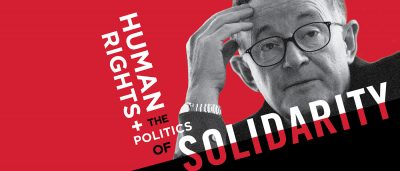
In 2019, the Gladstein Family Human Rights Institute convened the conference Human Rights and the Politics of Solidarity to honor the life and intellectual legacy of Osiatyński. Bringing together scholars, activists, and practitioners from around the world, the gathering reflected on Osiatyński’s enduring commitment to human dignity, constitutionalism, and the power of solidarity in advancing human rights during moments of political uncertainty.