In Memoriam: András Riedlmayer (1947 – February 9, 2026)
Dear community members and friends,
It is with great sadness that we share the news that our dear friend and colleague, András Riedlmayer, passed away on Monday, February 9. We are deeply saddened by this loss, and we reflect on the extraordinary life and legacy of someone who meant so much to so many of us.
András was a remarkable mentor, scholar, and advocate, and working with him on The András Riedlmayer Collection taught us invaluable lessons about the preservation of truth, the responsibility of documentation, and the enduring power of the archives that he donated in order to bear witness to human rights. His generosity with his time, knowledge, and guidance shaped not only our work, but also our understanding of why this work matters.
During my internship, I was fortunate to witness the meticulous nature of András Riedlmayer's documentation. Through his work, he showed that protecting cultural heritage and religious sites is inseparable from protecting the dignity of the communities they represent. I remain deeply grateful for the opportunity to have met and worked with him.
- Gamze Ozker, curator of the András Riedlmayer Archival Collection
A native of Budapest, Hungary, András served as Director of the Documentation Centre for Islamic Architecture at Harvard University’s Fine Arts Library from 1985 to 2020. He studied at the University of Chicago and at Princeton University, where he specialized in Ottoman history and Near Eastern Studies. Over the course of his distinguished career, he published widely in academic and professional journals and contributed significantly to his field as president of the Ottoman and Turkish Studies Association and as a board member of the Islamic Manuscript Association.
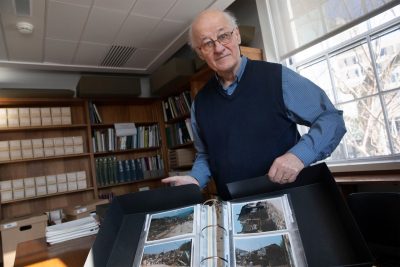
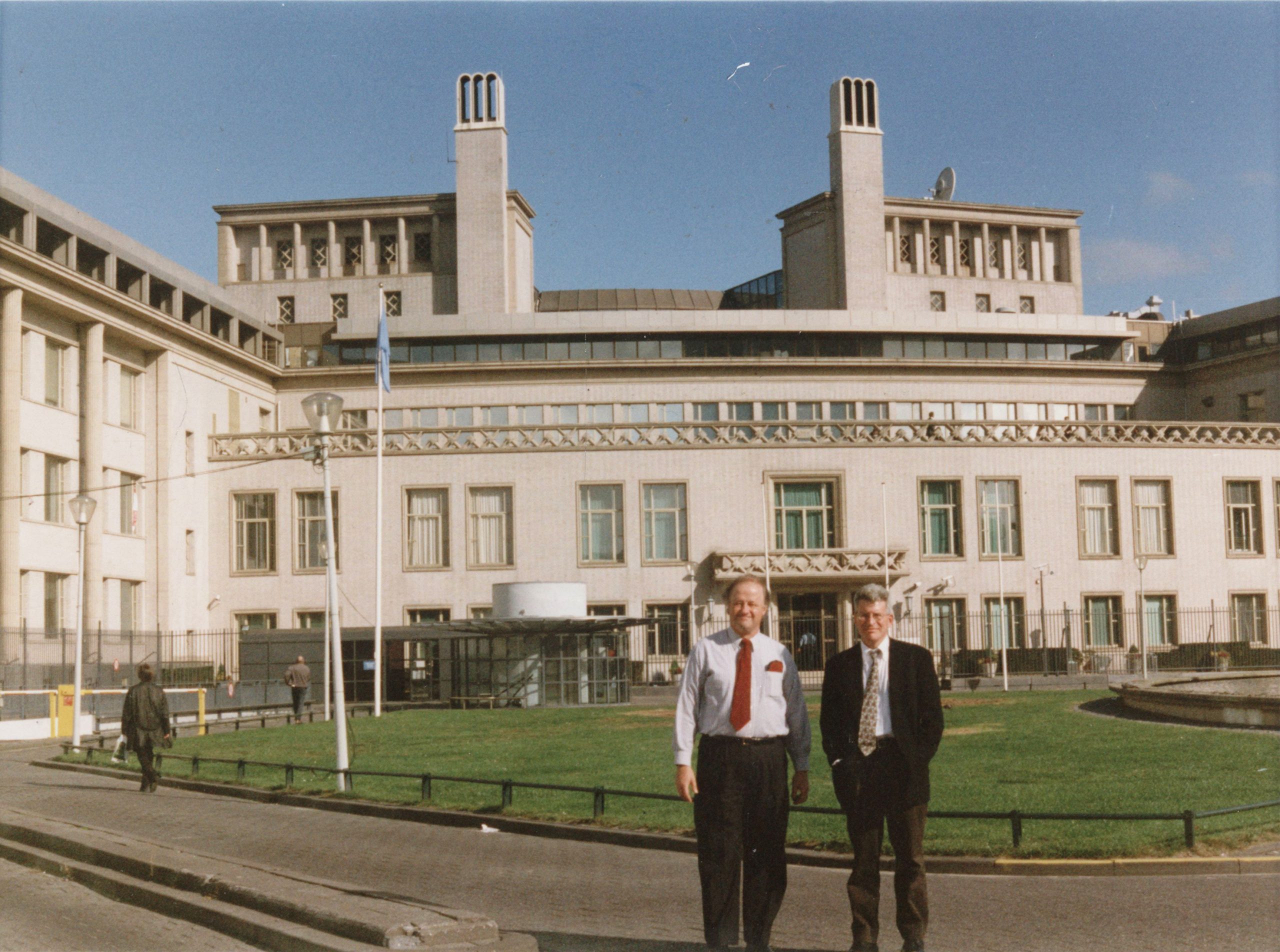
For more than 25 years, András devoted himself to documenting the systematic destruction of libraries and cultural heritage during the wars in the former Yugoslavia in the 1990s. His work not only preserved evidence of loss but also affirmed the cultural memory and dignity of affected communities. In 2002, he appeared as an expert witness on cultural destruction in the trial of former Yugoslav President Slobodan Milošević at the International Criminal Tribunal for the former Yugoslavia (ICTY). He went on to testify as an expert witness in nine ICTY cases, including the trials of Dr. Radovan Karadžić and Gen. Ratko Mladić, as well as in the genocide case brought by Bosnia and Herzegovina against Serbia before the International Court of Justice. Through this work, he demonstrated how scholarship and meticulous documentation can serve justice.
Beyond his professional accomplishments, András will be remembered for his kindness, and unwavering commitment to students, colleagues, and the communities whose histories he worked so diligently to protect. He believed deeply in the role of libraries and archives as guardians of cultural memory and as instruments of accountability. He will also be remembered for his warm smile whenever we mentioned his favorite dessert, baklava. We will think of him each time we are fortunate enough to enjoy a slice, grateful for the joy he brought into our lives as well as to our conversations.
We extend our deepest condolences to his family, friends, colleagues, and all who were touched by his life and work during this time or mourning.
His legacy will endure in the collection he built, the scholarship he advanced, the justice he helped make possible in the ICTY and ICC trials, and in the many lives he inspired.
Respectively with sympathy,
Aida Gradaščević and Predrag Dojčinović
The ICTY Digital Archives Team