The Gladstein Family Human Rights Institute announces the Human Rights Research Grant Competition for graduate students at the University of Connecticut. The objective of the competition is to support and promote research projects on human rights related questions.
2026 Graduate Research Grant Recipients
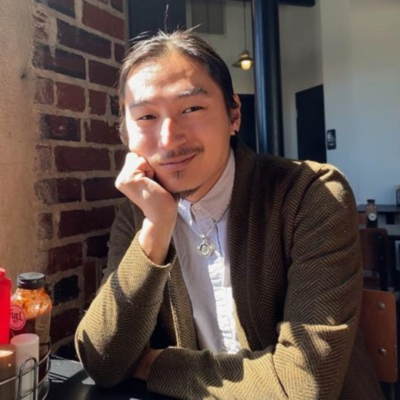
Jacob Harold Finnegan
Master's Student, Department of History
“Dignifying Death and the Making of Veterans’ Rights in the Grand Army of the Republic”
About the Project
This project investigates how Grand Army of the Republic (GAR) post records and nineteenth‑century regimental histories articulated community‑based frameworks of veterans’ dignity that anticipated modern human‑rights norms. Through close analysis of localized commemorative practices as seen in pensions, burial records, and public remembrance acts, it demonstrates how communities transformed military sacrifice into moral and civic obligations while simultaneously revealing the limits of equitable recognition.
Impact
This project is significant because it demonstrates that contemporary debates over veterans’ benefits, burial rights, and memorial equity are rooted in nineteenth‑century struggles to define dignity as a civic obligation rather than a discretionary honor. By tracing how GAR communities both advanced and constrained recognition for different groups of veterans, the study provides historical perspective that directly informs present‑day efforts to address unmarked graves, racial disparities in commemoration, and state responsibility toward those who have served.
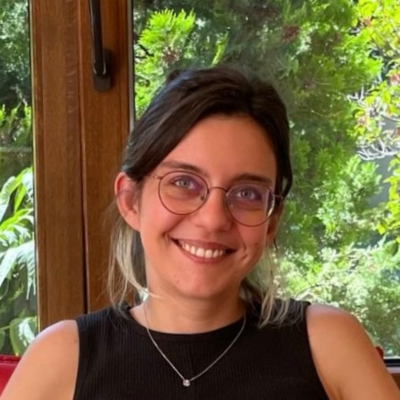
Rojda Idil Arslan
Ph.D. Candidate, Department of Comparative Literary and Cultural Studies
“Empathy, Hospitality and the Human Rights Novel in Kurdistan”
About the Project
This doctoral dissertation examines human rights literature produced by writers from Kurdistan and its diaspora. The project argues that the standard framework of empathy often flattens the complexity of Kurdish writing. Rojda instead proposes ‘hospitality,’ drawn from Kurdish cultural tradition, as an alternative reading practice for human rights novels. Through archival research at the Kurdish Institute of Paris, she aims to document how Kurdish intellectuals engaged with global human rights regimes between the 1940s and 1980s and how these engagements are reflected in literature.
Impact
This research aims to highlight intellectual traditions that have received less attention in mainstream human rights discussions, showing that these communities are active thinkers, not just passive subjects. It also provides a historical perspective on how marginalized people have navigated international politics and asserted recognition on their own terms.

Elyse Smith
Ph.D. Student, Department of Anthropology
“Collaborative Ethnography on the Native American Political Ecologies of Peyote”
About the Project
This dissertation research explores how certain communities in North America think about and use psychedelic substances, and the role that consciousness-altering substances can play in local healing systems and political ecologies. Elyse’s work pays attention to changing laws around the use of these substances as well as anthropogenic environmental threats to certain traditional psychoactive plant medicine sacraments. She uses archival and ethnographic research methods to explore the political, cultural, and ideological tensions around these substances, and especially the friction between Indigenous plant medicine-based spiritual traditions and current efforts to reform psychedelic drug policy.
Impact
As a psychoactive plant medicine’s traditional practice and very existence is threatened by settler colonial forces of Western modernity, Elyse seeks to understand what decolonizing psychedelic drug policy might mean, what forms of conservation and stewardship are bio-culturally appropriate, socio-historically conscious, and spiritually respectful -- and consequently, Indigenous communities’ preferences and urgent needs within "natural resource management" policy. The politically dynamic pasts and futures of psychedelic community stakeholders with divergent conceptions of environmental & cultural rights and biocultural conservation can teach us a lot about dispossession/colonization and resultant historical/intergenerational trauma; community well-being and social resilience; “universal cognitive liberty” and religious freedom; and Indigenous sovereignty.
Former Recipients
2025
- Bianka Adamatti
Ph.D. Candidate, Department of Political Science
"Genocide through Protracted Land Dispossession: Advancing Domestic and International Legal Approaches Affirmed by Insights of the Guarani-Kaiowá People in Brazil" - Danielle Nadeau
Ph.D. Candidate, Anthropology Department
"Judged by Numbers: How Algorithms Are Quietly Rewriting the Courts"
2024
- Asmita Aasaavari
Ph.D. Candidate, Department of Sociology
"Graying Matters, Aging Bodies: Economic and Social Rights Among Seniors in Rural America" - Spencer Hayes
Ph.D. Candidate, Department of Political Science
"Follows, Likes, and Shares: Social Media's Dichotomous Agency in Human Trafficking" - Lauren Danielowski
Ph.D. Candidate, Department of Sociology
"Claiming Reproductive Rights in the US Commercial Surrogacy Market"
2023
- Catalina Alvarado-Cañuta
Ph.D. Candidate, Department of Anthropology
"Healing of Colonial Wounds in Indigenous Peoples through Art"
2022
- Sarah Luria
Ph.D. Candidate, Neag School of Education
"Toward Equity Mindsets: A Tool for Evaluating the Equitable Self" - Rianka Roy
Ph.D. Candidate, Department of Sociology
"Mapping Transnational Rights: Indian Tech Workers’ Mobilization in India and the US" - Madeline Baird
Ph.D. Candidate, Department of Anthropology
"Ethnographic research on the socio-ecological impact and right to health for migrant peoples ‘in transit’ through Darién, Panamá"
2021
- Asmita Aasaavari
Ph.D. Candidate, Department of Sociology
"Domestic Workers’ Organizing in India" - Maria Hall-Faul
Ph.D. Candidate, School of Social Work
"The Right of Children to an Adequate Standard of Living: TANF in the United States" - Ashley Walters
Ph.D. Candidate, Department of Anthropology
"Statelessly United: An Ethnographic Inquiry of Statelessness in the United States"
Eligibility Criteria
- Open to all JD, LLM, master's, and doctoral students in all disciplines from any UConn campus
- In any given year, a student may receive either a Graduate Student Research Grant or the Dissertation Research Fellowship, but not both.
How to Apply
Access the application via Microsoft Forms. The application requires the following materials:
- Narrative description of the proposed research (three pages, double spaced, 12 point font) that contains the following:
- Project Rationale: Please describe your reasoning for undertaking this research project and the impact you believe your project will have on understanding of or policies affecting human rights.
- Impact: Identify the expected contribution your research will make to the field of human rights.
- Methodology: Explain how you will conduct your research. Be explicit in describing the types of methods employed and the advantage of using these particular methods.
- Anticipated budget and budget justification (of up to $2,500). The purpose of the budget narrative is to supplement the information provided in the anticipated budget document to demonstrate you have considered the costs associated with your research. The narrative is different from the spreadsheet in that rather than listing expected costs in dollars, the narrative explains the rationales for these expected costs. (Download the Anticipated Budget and Budget Narrative Template)
- Current CV
- Separate statement from your advisor or supervisor on how the funding will advance your research. The statement should be submitted electronically via https://forms.office.com/r/uNhcjRgDsi.
Applications for the current cycle closed on April 3, 2026. Check back here in Fall 2026 for application instructions for the 2027 cycle.
Evaluation of Applications
The proposal should demonstrate overall excellence with a focus on human rights issues, understood broadly. Projects should make a significant contribution to ongoing scholarly, policy, and practice debates in the field of human rights. Priority will be given to applications that evidence human rights coursework and/or prior substantive human rights engagement.
Awards will prioritize primary research activities, including but not limited to: archival research, participant observation, interview, data collection, data set construction, ethnography, textual criticism, digital archiving, and historical preservation. Requests for funding for conference travel and seminar/course tuition (including language or methods training) will also be considered.
All proposals will be reviewed and ranked by a multidisciplinary review committee comprised of Gladstein Human Rights Committee members. The number of grants will depend on the number of applications ranked 'excellent' by the review panel.